

Someone finds your website, looks around, maybe even reads your pricing page — and leaves without doing anything. For most businesses, that’s the end of the story. That visitor is gone, and the ad spend or SEO work that brought them there is written off as a near-miss.
It shouldn’t be the end of the story. That visitor is, statistically, one of the best prospects you’ll ever have — and there’s a name for reaching them again: remarketing.
Why a Second Chance Matters More Than a First Visit
Most people don’t buy, book, or fill out a form the first time they land on a website — regardless of industry. They’re comparing options, getting interrupted, or simply not ready yet. Remarketing is the practice of showing ads specifically to people who already visited your site, rather than starting from zero with a cold audience every time.
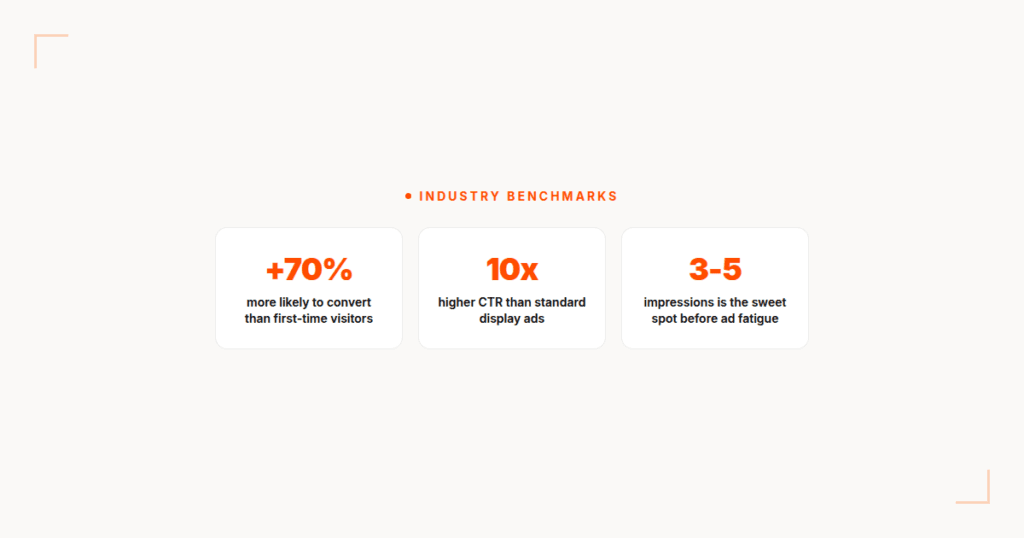
The data on this is consistent across a wide range of industry studies: visitors who see a remarketing ad after leaving a site convert at meaningfully higher rates than first-time visitors who never see one — commonly cited figures put retargeted visitors at around 70% more likely to convert. Click-through rates on retargeted ads also run roughly ten times higher than standard display advertising, since the audience already recognizes the brand instead of encountering it cold.
Why It Takes More Than One Look
Decisions rarely get made on the first exposure to anything, and websites are no exception. A visitor might need to see a business two, three, or five separate times — across a search result, a social post, an ad, a recommendation — before the idea “maybe I should actually contact them” fully forms. Remarketing is what fills in those repeat exposures deliberately instead of hoping they happen by chance.
That said, more isn’t automatically better. Showing someone the same ad dozens of times stops feeling helpful and starts feeling intrusive — most advertisers cap frequency at somewhere around three to five impressions per person over a given period to avoid that fatigue.
What This Actually Looks Like to Set Up
On Meta (Instagram and Facebook), this works through what’s called a Custom Audience, built from your website’s pixel data. In practice, it means creating a list of people who visited a specific page — say, a services or pricing page — within the last 30 days, while excluding anyone who already completed the action you wanted (like submitting a form). That second part matters: showing an ad to someone who already converted just wastes budget and, worse, can come across as not paying attention.
We set this up on our own site recently, for exactly this reason — anyone who visits our services page but doesn’t request an audit becomes part of a small, specific audience we can reach again with a different message, rather than being gone for good the moment they close the tab.
Why Small Businesses Skip This (And Shouldn’t)
Remarketing has a reputation for being an “advanced” tactic, something for bigger companies with bigger budgets. In reality, it’s often the cheapest, highest-return part of a small campaign, precisely because the audience is small and specific — you’re not paying to reach strangers, you’re paying to remind people who already showed real interest.
The catch is scale: a remarketing audience needs a baseline amount of website traffic before it’s large enough to run efficiently, which is exactly why it tends to get added a few weeks into a campaign rather than on day one.
The Part Most Businesses Get Wrong
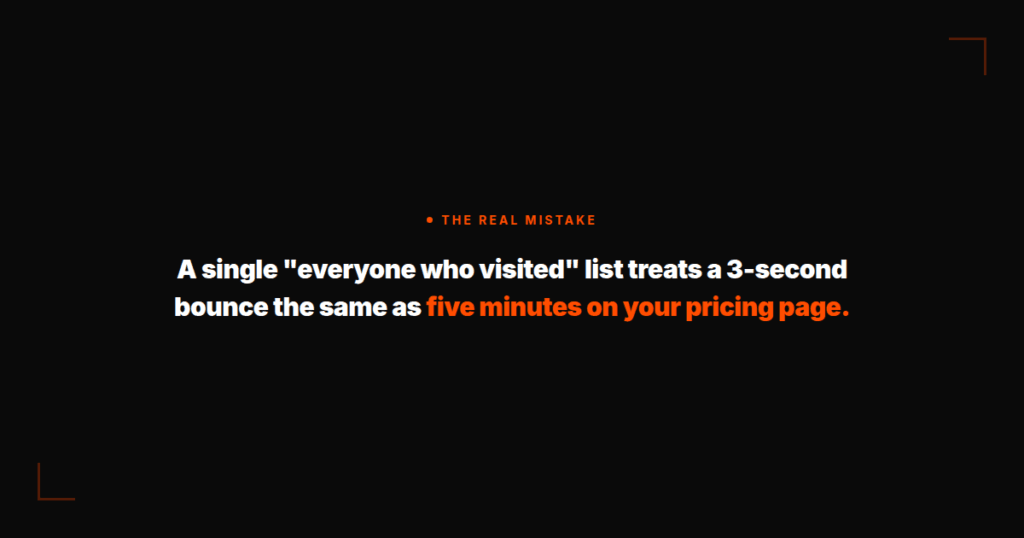
A single, undifferentiated “everyone who ever visited” list treats a person who bounced off the homepage in three seconds the same as someone who spent five minutes on the pricing page. Those are two very different levels of intent, and lumping them together wastes the actual advantage remarketing offers: the ability to speak to people based on what they specifically showed interest in, not just that they existed on your site at some point.
Not Sure If Your Site Is Set Up to Capture This?
Remarketing only works if the tracking behind it is actually built correctly in the first place — pixel installed, key actions tracked, audiences properly segmented. A lot of sites are running ads without any of that in place, quietly leaving this entire layer of return on the table.
We’ll tell you exactly what’s tracked on your site right now — and what isn’t.