
GloriaFood is shutting down on April 30, 2027. If you’re one of the thousands of restaurants running your online ordering through it, that date is a fact you now have to plan around, not a possibility.
What’s actually happening
Oracle confirmed the shutdown through in-app notices and partner emails. New signups are already closed. After April 30, 2027, the ordering widget on your site stops taking orders, your menu setup disappears, your delivery zones are gone, and so is your order history. There’s no read-only archive and no extension. The date doesn’t move.
That’s not a dramatic reading of it — it’s just what a hosted platform shutting down means. Everything that lived on GloriaFood’s servers goes away when GloriaFood does.
The trap in the obvious next step
The instinct is to pick another hosted ordering platform and move on. That’s a reasonable short-term fix, and there are decent ones out there. But it’s worth noticing what it actually does: it makes the same decision again, just with a different company’s name on the shutdown notice next time. Nothing about switching from one rented platform to another changes the underlying arrangement — your ordering system still lives on someone else’s servers, on someone else’s timeline.
This isn’t a knock on hosted platforms generally. GloriaFood ran for years and worked fine for a lot of restaurants. It’s just a documented example of what that arrangement costs you when the company on the other end changes its mind.
One thing you can hand over today: whichever system you move to, the menu has to be entered again. Send us your menu as a PDF or a photo and we will send back a ready-to-import CSV file, free and with no obligation — usually within one working day. Send us your menu.
What it actually means for the plugin to be yours
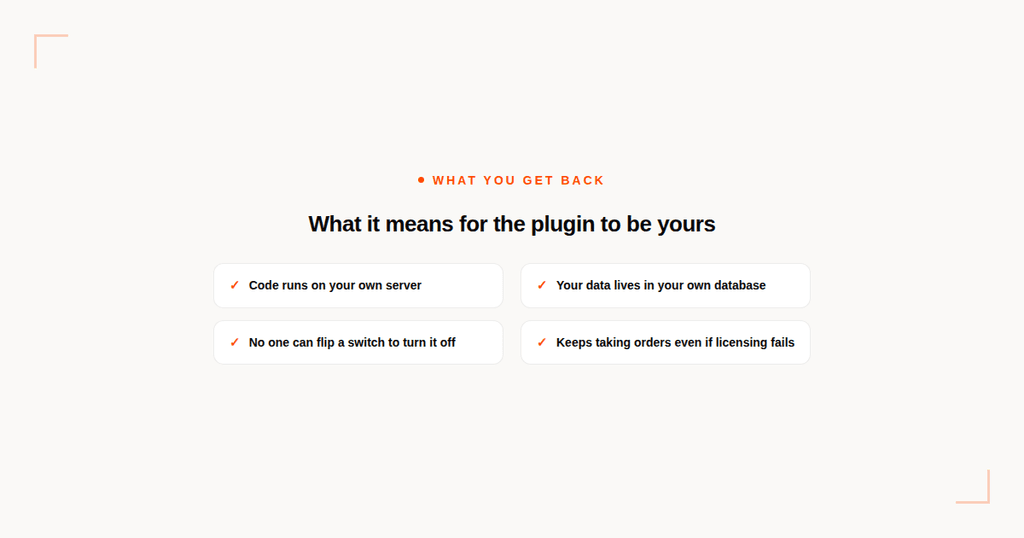
The alternative is software that installs on your own WordPress site instead of running on someone else’s platform. Concretely, that means three things:
- The code runs on your restaurant’s own server. There’s no switch on someone else’s end that turns it off.
- Your menu, your guest list, and your order history live in your own WordPress database. You export them whenever you want — you don’t have to ask anyone’s permission.
- If Freemius — the licensing system Food Ordering Now uses — ever goes down or stops responding, the plugin keeps taking orders anyway. The license check is written to fail open by design: when it can’t reach the license server, it defaults to “yes,” not “no.”
That third point is the one worth sitting with, because it answers the only question that actually matters after living through a shutdown once: what happens if you disappear too? A competitor selling another hosted platform can’t make that same promise, because they are the server. We’re not.
The part that’s still on you
Owning the software isn’t free of responsibility — it just moves the responsibility. On a hosted platform, someone else handles backups, updates, security patches, and making sure order confirmation emails actually land in your customers’ inboxes. When the plugin lives on your own site, that work falls to you or to whoever maintains your site for you. That’s a real cost, and it’s worth being upfront about instead of pretending self-hosting is maintenance-free.
If that’s not something you or your web person wants to take on, NSBM offers ongoing WordPress maintenance — backups, updates, and security handled, so owning the plugin doesn’t mean babysitting it.
What the migration actually looks like
In practice, moving off GloriaFood onto Food Ordering Now is a short process, not a project:
- Import your menu. Export your existing menu as a CSV and import it directly — no re-typing every dish and price by hand.
- Draw your delivery zones on a map. Set the areas you actually deliver to, visually, instead of guessing at postcodes.
- Drop in the shortcode and run a test order. The ordering system goes live on your existing WordPress pages, and you place one test order before pointing real customers at it.
Pricing
One license covers one site. It’s the same plugin in all three cases — the difference is how you pay and what happens to new orders once support or your subscription runs out.
| Plan | Price | Support | What happens when it expires |
|---|---|---|---|
| Monthly | €19.99 / month | Not included | New orders stop |
| Annual | €124.99 / year | Included for the subscription period | New orders stop |
| Lifetime | €249.99 one-time | 6 months, renewable | Nothing — keeps working permanently |
All three plans include a 7-day free trial, no card required. Prices are net; VAT is added at checkout depending on your country, and businesses with a valid EU VAT number are exempt. Billing is handled by Freemius as our authorized reseller.
If the whole point of switching is never having this conversation again, the Lifetime plan is the one that actually delivers on that — it’s the only option where nothing happens when a subscription period ends, because there isn’t one.
You have months to do this properly, not days. Start the 7-day free trial and move your menu over before the deadline turns into a deadline you’re up against.